Wall Street rises as materials and crypto stocks offset continued bond sell-off
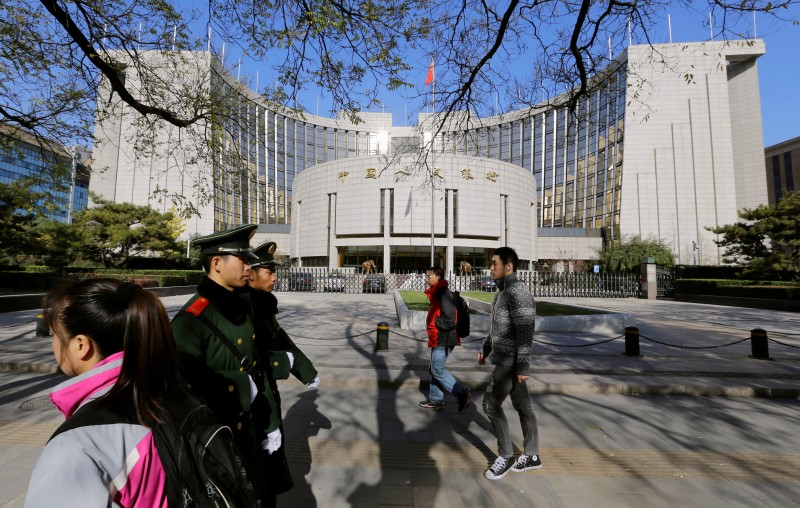
Investing.com — The People’s Bank of China (PBOC) extended its gold-buying momentum for a 16th consecutive month in February, bolstering its reserves as escalating geopolitical tensions in the Middle East drive a renewed flight to safe-haven assets.
The move comes as Spot Gold surged 1.85% to $5,171.12 an ounce by 16:00 ET (21:00 GMT), rebounding sharply from earlier session lows. Data released on Saturday revealed that the PBOC increased its bullion holdings by 30,000 troy ounces, bringing its total fine troy gold reserves to 74.22 million ounces.
China’s latest gold accumulation maintains a structural trend of de-dollarization that began in late 2024.
Geopolitical friction bolsters bullion demand
Gold’s recent ascent back above the psychological $5,000 mark has been underpinned by a deteriorating global security landscape. Following joint military actions by the U.S. and Israel against Iranian targets, investors have aggressively rotated out of riskier equities and into defensive positions.
Global central bank buying showed signs of a seasonal slowdown in January. The banks bought an average of just five tons compared to the 27-ton monthly average seen last year. Analysts suggest the "oil shock" and regional instability will sustain accumulation throughout 2026.
"Volatile prices and the holiday season may have given some central banks pause," noted Marissa Salim, an analyst at the World Gold Council. She emphasized that geopolitical risks show "little sign of abating," which is likely to keep institutional appetite elevated. In the exchange-traded fund (ETF) market, US-listed gold ETFs recorded $4.5 billion in net inflows in February, signaling that retail and institutional sentiment is aligning with central bank activity.
Reserve divergence and liquidity needs
The gold bullion market is witnessing a notable divergence in central bank strategies. The broader accumulation trend is led by East Asian and Central European nations. Poland’s central bank, previously the world’s most aggressive buyer, has recently proposed selling a portion of its reserves to finance urgent domestic defense spending.
Russia and Venezuela’s central banks have also emerged as recent sellers, likely seeking to bolster liquidity amid tightening sanctions and economic isolation.
The USD/CNY exchange rate remained relatively stable at 6.8968 during the announcement. But the PBOC’s consistent gold purchases underscore a long-term strategic shift to insulate the Chinese economy from currency volatility.
Analysts at J.P. Morgan currently forecast gold prices to average $5,055 through the end of 2026. They cite a persistent "backlog" of central bank demand as a primary floor for the market, even as short-term volatility persists due to shifts in U.S. monetary policy.


