Wall Street rises as materials and crypto stocks offset continued bond sell-off
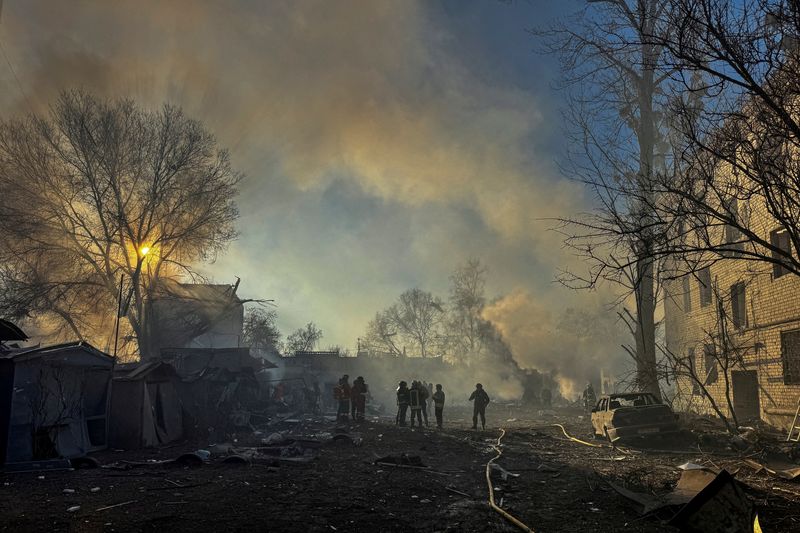
Investing.com -- The rapid escalation of global drone warfare has transformed Ukraine into a critical strategic provider of counter-unmanned aerial systems (UAS) expertise and advanced defense technology, according to an exclusive report by The Wall Street Journal on Saturday.
The widespread expansion of Iranian drone operations across the Middle East has reshuffled international defense priorities, prompting a significant shift in how Western and Gulf nations utilize Ukrainian military innovations.
Leveraging four years of unmatched operational experience defending against Iranian-designed hardware, Ukraine is successfully transitioning from a passive recipient of foreign aid into an active contributor to global security.
Ukrainian President Volodymyr Zelensky has conducted multiple high-profile diplomatic tours across the Gulf region in recent months, deploying specialized teams of approximately 200 troops to demonstrate domestic drone-interception platforms and securing preliminary agreements for local investment and defense co-production.
The tactical integration follows the establishment of Ukrainian drone-manufacturing plants across Europe earlier this year, alongside the expanding adoption of Kyiv’s proprietary Delta battlespace management software by Western European militaries seeking to modernize real-time command structures.
The defense technology shift comes as broader trans-Atlantic tensions fundamentally alter European security calculations.
Following the sudden withdrawal of thousands of American troops from European bases, regional defense and security officials increasingly view Ukrainian technological capabilities as fundamental to the continent’s own long-term defense architecture.
To stabilize these critical frontline supply lines, the European Union finalized a $105 billion financial lifeline in April to fully fund Ukraine’s defensive requirements through next year.
However, the Middle East conflict introduces distinct industrial and macroeconomic headwinds for Kyiv.
Intensive missile exchanges in the Gulf have consumed a substantial portion of U.S.-made missile interceptors, creating long-term supply constraints for platforms like the Patriot system.
Concurrently, elevated global oil prices have partially relieved economic pressure on Moscow by bolstering Russian energy revenues.
To disrupt Moscow’s capital flows, Ukraine has aggressively accelerated long-range strikes against Russian oil ports and processing pipelines, using low-cost, mass-produced domestic drones to systematically degrade enemy energy infrastructure ahead of the winter season.


