


The stock market is a constant tug of war between buyers and sellers. When this tension finally breaks, the resulting surge of momentum can lead to some of the most profitable and exciting trades an investor can make. This dynamic event is known as a stock chart breakout, and it’s a critical signal for anyone engaging in technical analysis strategies.
But how do you reliably spot the real breakouts from the notorious “traps”? In this comprehensive guide, we’ll demystify the process, providing you with a step by step blueprint for identifying, confirming, and trading high probability breakout patterns.
We’ll show you what truly matters: not just the price action, but the crucial evidence needed to validate the move. Get ready to transform your understanding of momentum and turn volatility into opportunity.
The Ultimate Time Saver: Analyze Any Chart in 1 Click 📊⏱️
You understand the complexity involved in manually cross-referencing trends, RSI, MACD, and volume to figure out continuation patterns. But the financial markets move so fast that every minute spent manually analyzing a chart is an opportunity lost.
But what if you could instantly run a full technical health check on any chart and get the institutional-grade verdict in seconds?
Let WarrenAI do the heavy lifting on advanced chart analysis and receive specific entry, stop-loss, and profit target prices based on technical analysis and risk/reward calculations that spot opportunities humans often miss.
Stop guessing and start trading with confidence.
The Foundation: Understanding Support and Resistance Levels
Every true breakout begins with a boundary. Think of a stock’s price consolidating within a range as a form of “compression to explosion.” The price is confined, coiling up energy until one side finally capitulates. To see this confinement, you must first master Support and Resistance Levels.
Support is a price level where, historically, buying interest is strong enough to stop a decline. It acts like a floor the price struggles to fall through. Resistance is the opposite—a price level where selling interest overwhelms buying, acting as a ceiling.
Identifying these zones is the prerequisite for breakout trading because they define the exact thresholds a stock must cross to signal a new trend. A breakout, by definition, is simply the stock’s price moving decisively beyond one of these established levels.
Defining the Trading Range for High Probability Breakouts
Plotting these levels shouldn’t be guesswork. Look for price points where the stock has reversed direction multiple times. The more times a level has been tested and held, the stronger it is. When the price tightens—making several attempts at a resistance or support level without succeeding—the potential energy for a breakout builds dramatically.
This consolidation within a tight range is the signal that an explosive move is imminent.
Spotting the Setup: Classic Breakout Chart Patterns
Before a stock breaks out, it often leaves clues. These clues are specific classic breakout patterns that signal whether the next move is likely to be a continuation of the prior trend or a reversal.
Triangles and Wedges: The Compression Patterns
Patterns like the Ascending Triangle (a flat resistance line and a rising support line) are inherently bullish, showing buyers are becoming aggressive even as the price tests a fixed ceiling. Conversely, a Descending Triangle suggests bearish pressure.
These patterns are perfect examples of the “compression” metaphor; the range gets smaller and smaller, making the eventual breakout more forceful.
Rectangles and Continuation Patterns
A Rectangle pattern occurs when a stock trades horizontally between parallel support and resistance. A breakout from a rectangle is often a continuation pattern, meaning the prior trend is resuming after a pause. If the stock was trending up before the rectangle, a breakout above resistance is a continuation signal.
The Ultimate Confirmer: Trading Volume
You can spot a pattern and a break of a key level, but without one critical factor, you are likely walking into a trap: volume confirmation trading. Why? Because price alone can be manipulated or influenced by a few large orders.
A true, sustained trend change requires conviction from the broader market—and that conviction is measured by trading volume.
The Volume Surge Rule for True Breakouts
A genuine breakout must be accompanied by a significant surge in volume. This surge confirms that the market agrees with the price move. A good rule of thumb is to look for volume that is at least 1.5 times the stock’s average daily volume, or ideally, the highest volume seen in the last 10 to 20 trading sessions.
If a stock’s price breaks a major resistance level on low volume, ask yourself: Is the market truly committed, or is this just noise? The answer is almost always noise.
The Breakout Blueprint: A Step-by-Step Identification Process
To reliably how to identify breakout patterns in stock charts, follow this systematic checklist:
- Identify the Boundary: Clearly define the strong Support or Resistance level that has held for a meaningful period (e.g., several weeks).
- Spot the Pattern: Look for a classic compression pattern like a Triangle, Wedge, or Rectangle forming immediately before the boundary.
- Witness the Break: The price must close a candle (e.g., daily candle) decisively outside the Support or Resistance level. A wick or a brief penetration is not enough; the conviction must be reflected in the closing price.
- Confirm the Volume: This is the non negotiable step. Verify that the breakout candle’s volume is significantly above the average, ideally a substantial surge.
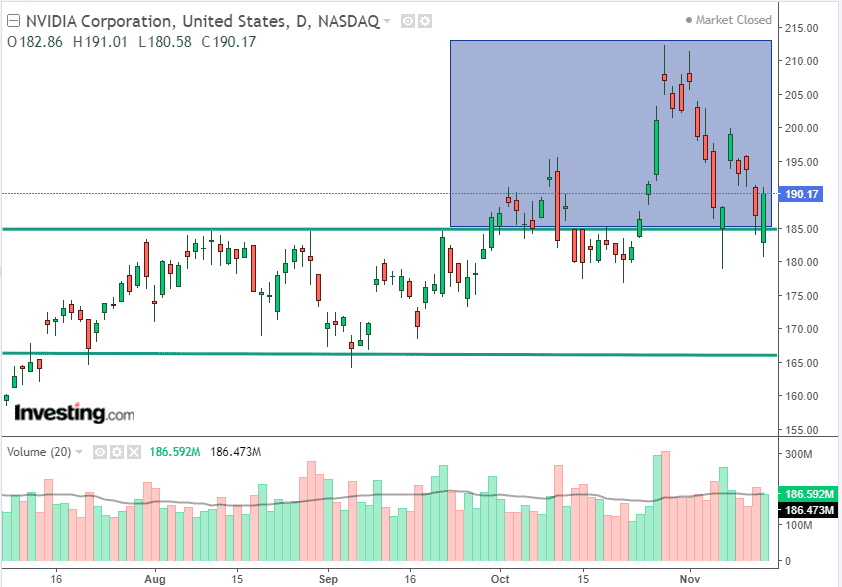
Experienced traders know that the majority of initial breakouts fail, which leads to the term false breakouts trading. A false breakout is a cruel deception: the price briefly moves past the key level, trapping hasty traders, only to quickly reverse back into its original range.
The Retest of the Breakout Level: Confirmation or Failure
The single best way to avoid a false breakout is to adopt a less aggressive, more strategic entry. Instead of chasing the initial breakout candle, wait for the price to perform a retest.
A successful retest happens when:
- The price breaks Resistance (becomes new Support).
- The price pulls back (retests) the former Resistance level.
- The former Resistance level holds firm as new Support, and the price bounces off it to continue in the breakout direction.
This retest provides a higher probability entry point, significantly limiting your risk. Why? Because the market has validated the breakout twice: once on the initial break and a second time by confirming the new support/resistance level.
Conclusion
Identifying and trading stock chart breakouts is one of the most powerful technical analysis strategies a trader can employ, but it demands patience and discipline. The key lies in shifting your focus from simply seeing price movement to demanding strong confirmation.
By understanding the foundational role of Support and Resistance, recognizing the compression patterns that precede a major move, and using volume confirmation as your ultimate validation tool, you can dramatically improve your ability to spot profitable opportunities and avoid the heartache of false breakouts.
Remember, successful trading is not about being right 100 percent of the time; it’s about managing your risk and only taking trades that offer a high probability of success. Start practicing this blueprint today, chart your levels, and let the market show its hand.
Institutional-Grade Analysis, Immediate Results 🔎⏱️
The market moves fast, so make sure your insights move faster. Access WarrenAI’s instant technical analysis alongside the full suite of InvestingPro tools, including proprietary fair value calculations, financial health scores and AI-powered ProPicks.
Unlike other AIs that only analyze numbers, WarrenAI indentifies visual patterns (candlestick formations, support levels, and trends) that make or break trades.
What WarrenAI Does Instantly: 🤖
🔎 Technical Summary: Provides a plain-language analysis of the current market structure, including trend, momentum, and key S/R levels.
⚠️ Risk Identification: Points out potential downside risks or failed signals the chart is flashing.
💡 Opportunity Spotlight: Highlights confirmed buy/sell signals based on institutional-grade algorithms, giving you a definitive edge.
🗺️ Trading Plan: Receive specific entry, stop-loss, and profit target prices based on technical analysis and risk/reward calculations that spot opportunities humans often miss.
Stop wasting time doing everything manually. Leverage WarrenAI to gain an instant edge to trade any market – across crypto, forex, commodities, stocks, ETFs and indices. Capture opportunities wherever they emerge, filtering hours of analysis into a concise, actionable report. Don’t get left behind. Start your InvestingPro membership today.




 App Store
 Google Play